

Budget Planning
Cost per product down to the input that drives it.
Bill of materials, ABC curve of inputs and pricing — so margin per product stops being an allocation and becomes a calculation with a source.
- The interface
- Cost and Bills of Materials
- Duration
- 1 min 23 s
- Area
- FP&A and Planning
Companies already operating on LeverPro








5 business days
for the P&L to be ready at Distrivisa — before, it only closed on the 15th
Distrivisa
+100
ERPs integrated natively, the Brazilian ones included
12
native surfaces reading the same base
ISO 27001
information security management
WHAT HOLDS IT UP TODAY
Product cost arrives after the pricing decision
It is not a lack of effort: it is the format. A spreadsheet has nowhere to hold the rule, the trail and the permission at once.
Margin per product is an allocation
Indirect cost is allocated by an old criterion nobody reviews. The mix decision is made on an approximate figure.
The bill of materials is out of date
It was built once and the input's price has changed six times since.
Pricing happens off to the side
The price is set in a spreadsheet that does not know today's real cost.
BUDGET PLANNING
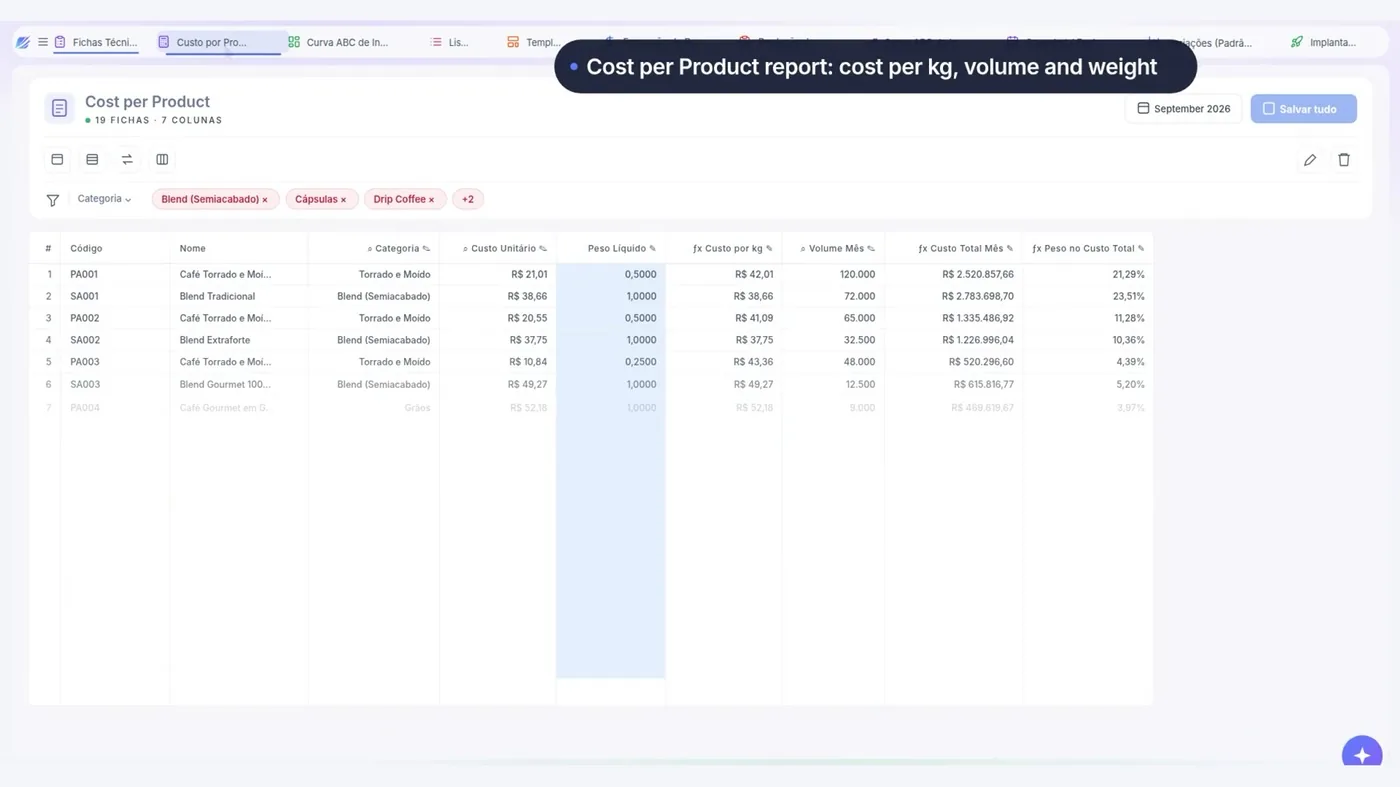
Cost and Bills of Materials running in LeverPro
1 min 23 s of the platform really running, recorded from the interface itself. Press play.
Bills of materials and cost per product in LeverPro, with ABC curve of inputs and price build-up.
WHAT YOU SEE ON SCREEN
The input building the cost, and the cost building the price
Four things happen on this screen, and each one settles a piece of the month.
- 0:08
The product's bill of materials
Input, quantity and unit cost — the structure that makes up the cost, not a closed figure.
- 0:28
The ABC curve of inputs
Which inputs move the cost. That is where supplier negotiation pays off.
- 0:50
Cost reaches the product
Direct and indirect making up unit cost, with the criteria explicit.
- 1:10
How the price is built
Target margin on today's cost, and the effect on the P&L by product line.
BEFORE AND AFTER
The same operation, in both formats
How it runs today
- Margin per product calculated on an old allocation
- A bill of materials frozen on the day it was built
- Price set in a spreadsheet that cannot see today's cost
- The mix decision is made in the dark
With LeverPro
- Cost built from the bill of materials, with explicit criteria
- Input priced from the base, not from memory
- Price built on today's cost
- Mix decided with margin per product in plain sight
Want to see this on your own figures, and not the video's?
Book a diagnosticHOW IT WORKS
From the ERP entry to the interface
Three steps, and the second is the one most tools skip.
-
The input comes from the ERP
Purchasing and inventory feed unit cost; the bill of materials stops depending on typing.
-
The bill of materials is structure
A product made of inputs, with quantities. Change the input's price and the product's cost changes.
-
Margin is a consequence
Cost and price on the same base make margin per product a reading, not a separate calculation.
WHO USES IT
What each role takes from this
Cost controllership
Keeps the bill of materials alive instead of redoing it by sampling.
Sales
Sets the price knowing the product's real margin.
CFO
Discusses mix with margin by line, not the company average.

“LeverPro brought simplicity and speed to our day-to-day: faster budgets, automatic analysis and detail down to the journal entry, with no rework in Excel.”
Dengo Chocolates · Food & Retail
RELATED INTERFACES
Other FP&A and Planning interfaces
The same base, a different operation.
-
 Budget Planning
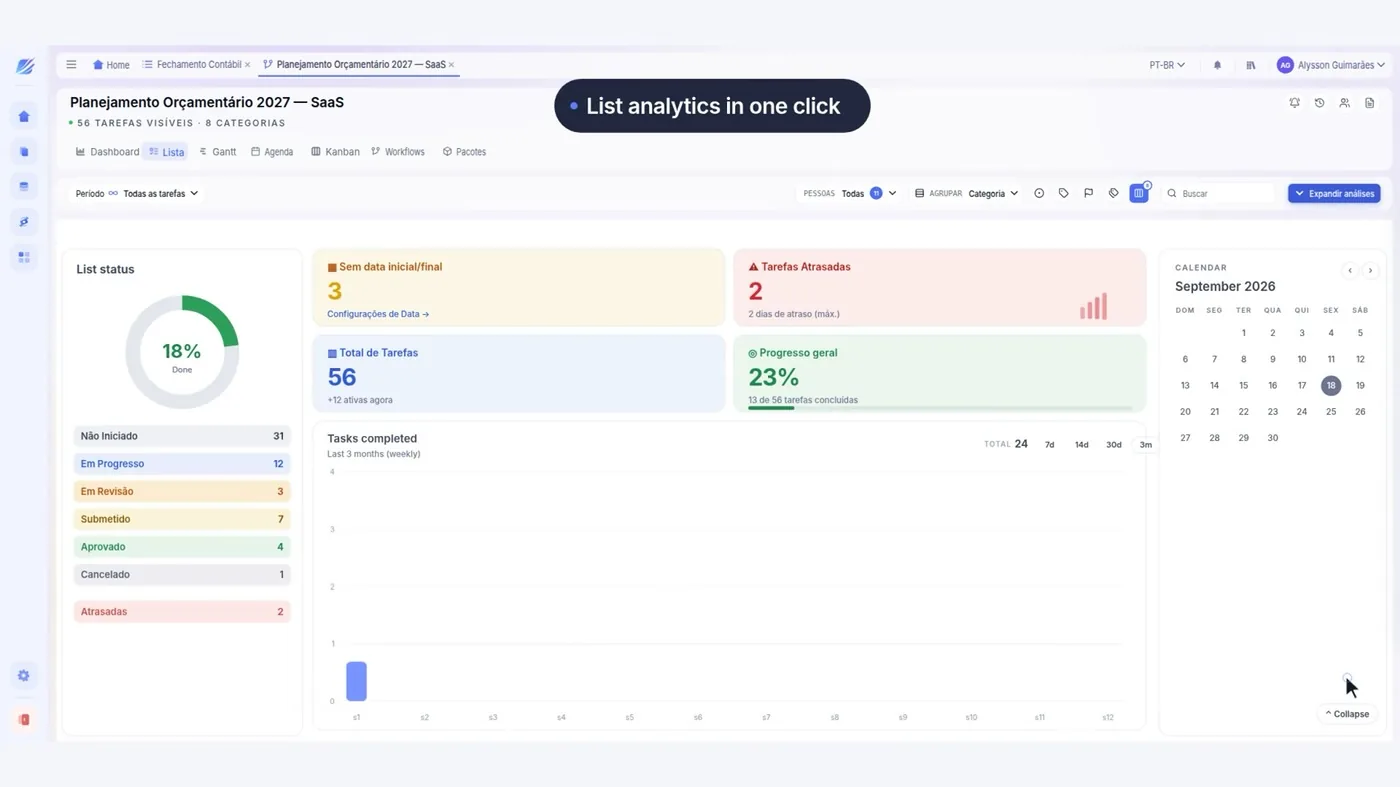
Budget Control
The whole cycle: tasks, owners and approval by authority limit.
See the interface
-
 Budget Planning
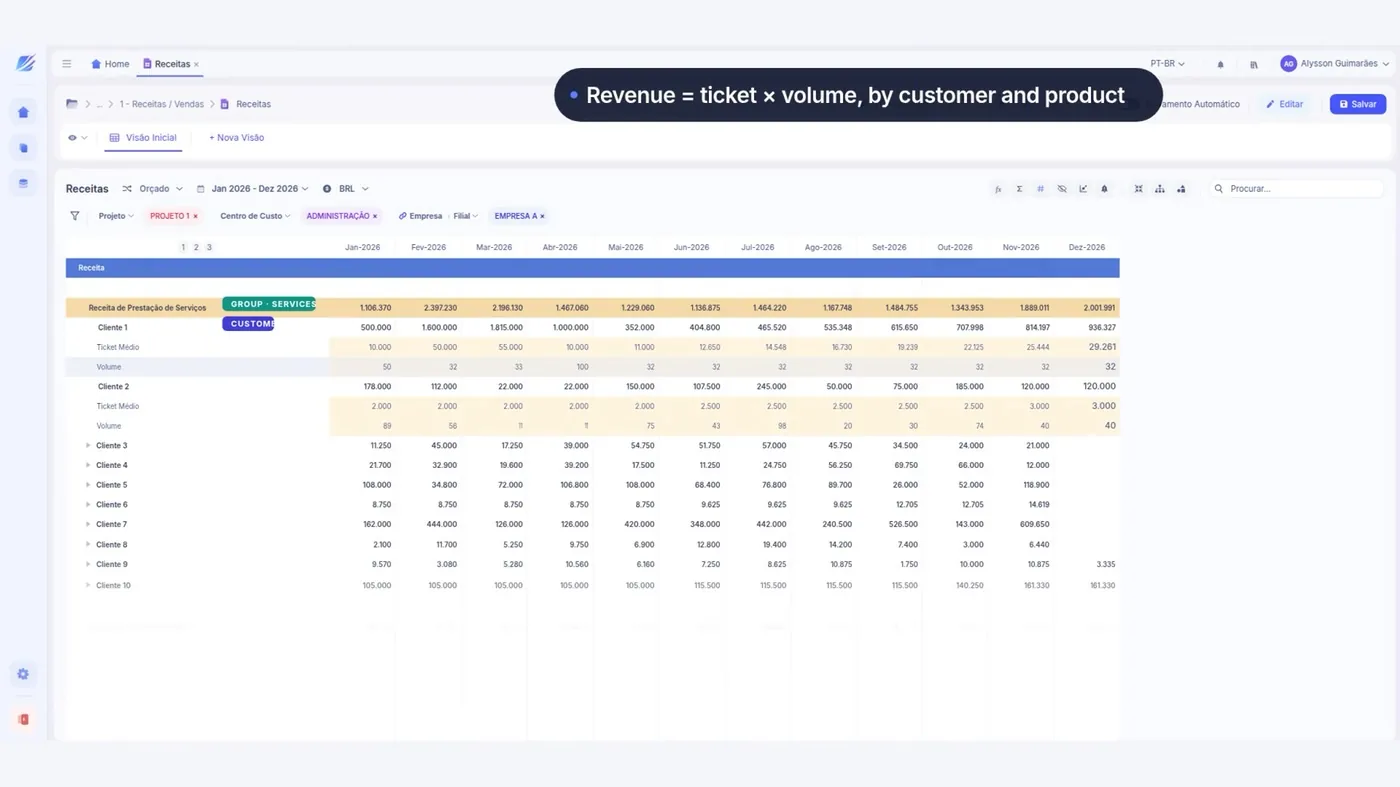
Revenue Forecast
Revenue projected by product line and by project, linked to the P&L.
See the interface
-
 Budget Planning
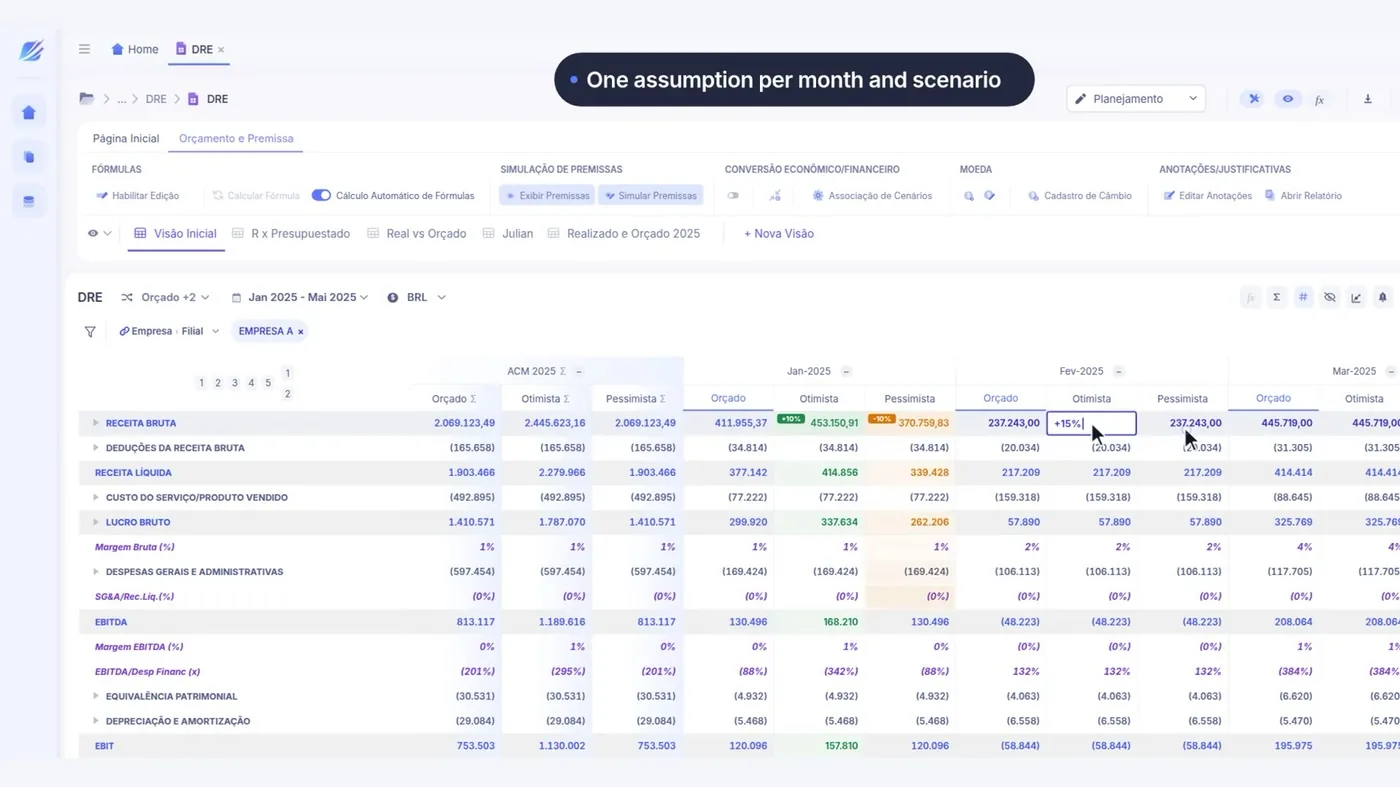
Scenario Simulation
Versions of the P&L side by side, with the assumption changing and the result along with it.
See the interface
-
 Budget Planning
Financial Modeling
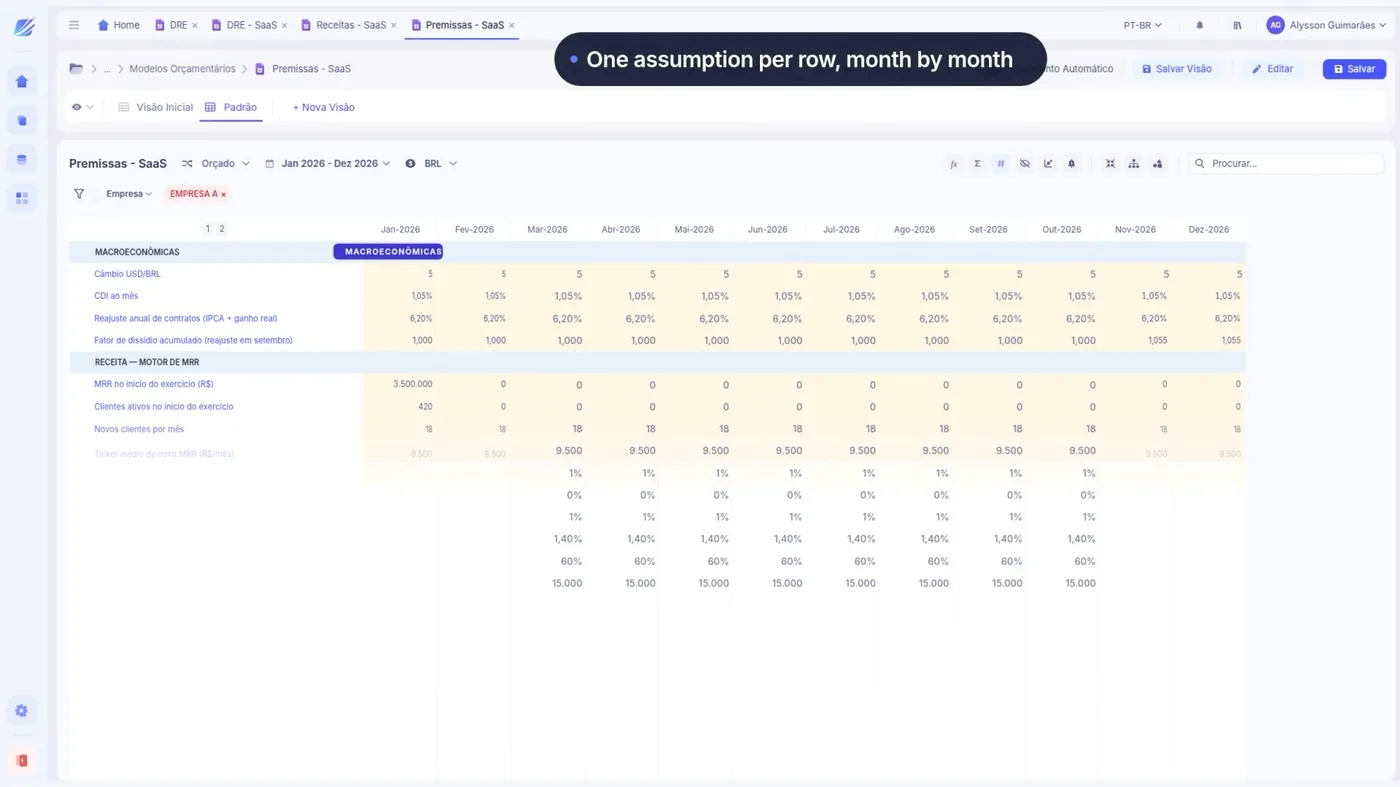
P&L, revenue and assumptions as a single model, with no broken formula.
See the interface
-
 Budget Planning
Org Chart and Payroll
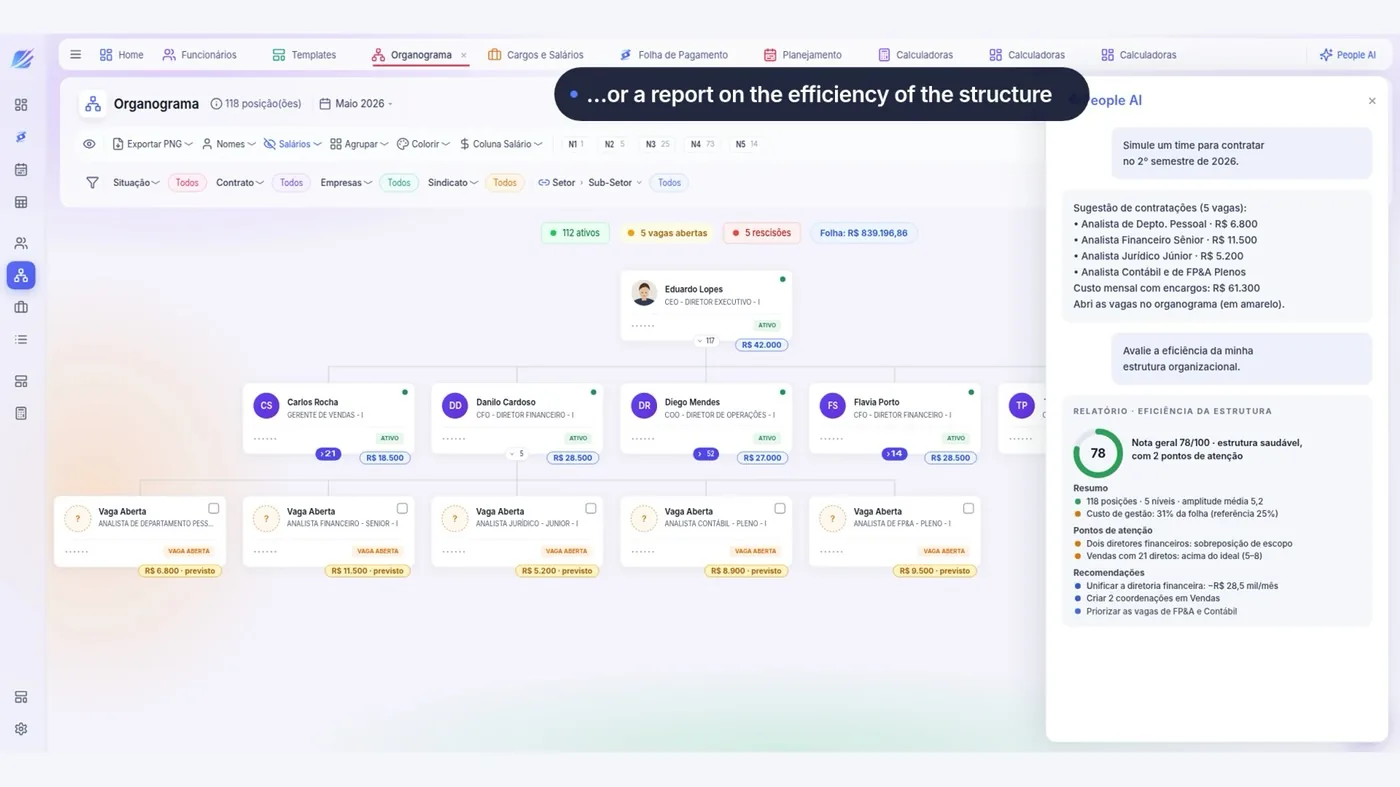
Headcount, roles and projected payroll, with the effect reaching the P&L.
See the interface
- See FP&A and Planning in full The area's 6 interfaces, what holds it up today and who uses it. Open
QUESTIONS
What people usually ask about this interface
If yours is not here, ask — we reply within one business day.
Does it work for manufacturing and retail?
What about indirect cost?
Can we see the effect of an input price rise?
This is the longest of the sixteen interfaces. Why?
RECOGNITION




Four years running in the 100 Open Startups ranking.
HOW YOUR DATA IS KEPT
-
Who gets in
Corporate authentication through the identity provider the company already uses.
-
Who sees what
Permission by area and by slice, on the same base — with no copy of the file.
-
Where the figure came from
A trail from the consolidated figure to the source accounting entry.
-
How the data comes out
Export guaranteed. The data belongs to your company.
Let's look at your budget cycle
Thirty minutes with people who do this every day, about how your planning runs today.
You leave knowing what can be solved first — or with us telling you it doesn't make sense.
No spam and no mailing list — we reply within one business day.
What happens in the conversation
- You tell us how planning runs today
- We point out what can be solved first
- Where LeverPro fits into your ERP and your spreadsheets
- Or we tell you it doesn't make sense, and that's that
How your data is kept
ISO 27001LGPDSSO / SAMLExportable data